Jan 28, 2025 · Originally published on Medium
DeepSeek R1: How It’s So Efficient and Cost-Effective
On January 20, 2025, Chinese AI company DeepSeek launched its new fully open source reasoning model, DeepSeek R1, surprising the tech world, especially Silicon Valley. What made it stand out wasn’t just its performance — similar to OpenAI’s top model, O1 — but its surprisingly low development cost of just $6 million. In comparison, O1 is rumored to have cost around $500 million to train.
DeepSeek R1 is also much cheaper to use:
- Input tokens: $0.55 per 1 million tokens
- Output tokens: $2.19 per 1 million tokens
This is almost 27 times cheaper than O1, which charges:
- Input tokens: $15.00 per 1 million tokens
- Output tokens: $60.00 per 1 million tokens
With its low cost and strong performance, DeepSeek R1 could change the game in the AI industry, giving Silicon Valley’s big players some serious competition.
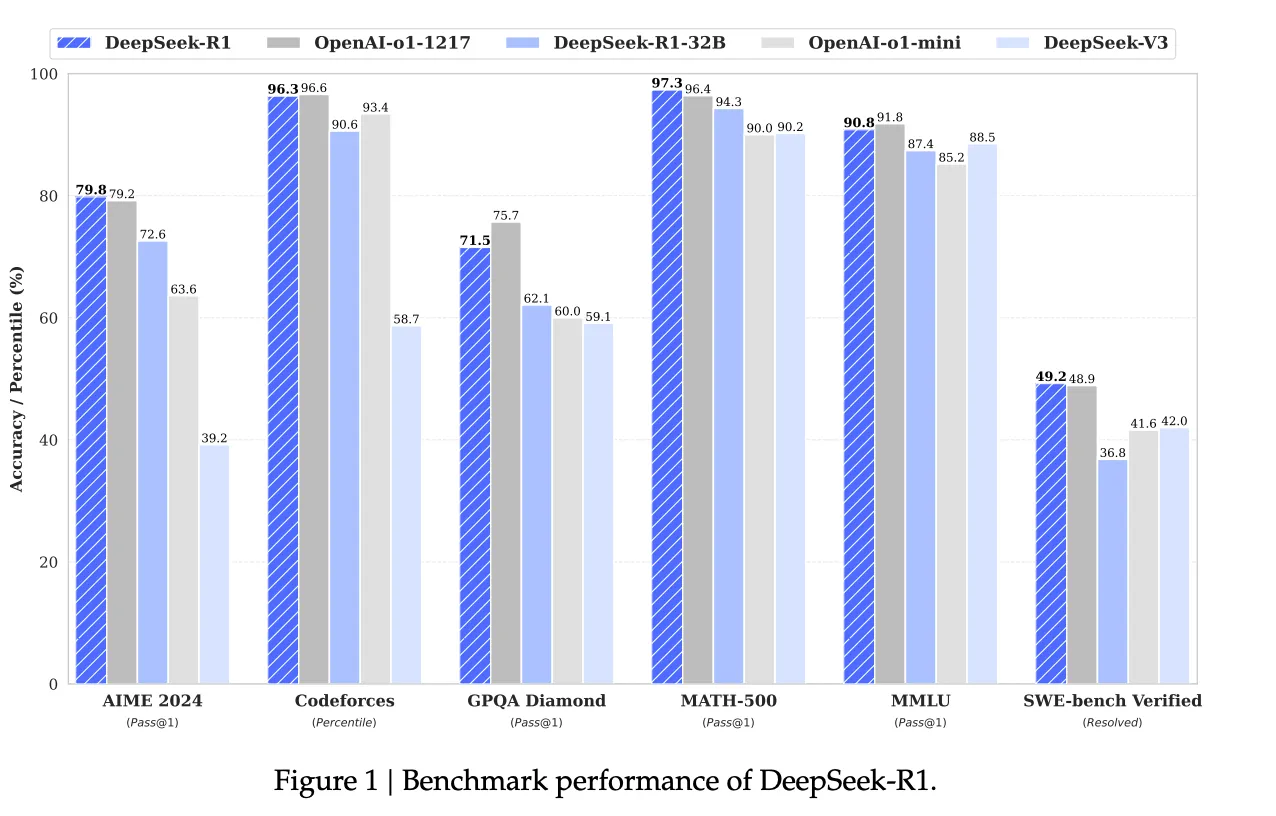 source DeepSeek
In this article, I will explore the architecture of DeepSeek R1, highlighting the innovative design that makes it exceptionally efficient and cost-effective.
Architecture
DeepSeek R1’s efficiency and cost-effectiveness are largely attributed to its innovative use of the Mixture of Experts (MoE) architecture. Here’s a detailed breakdown of how MoE functions within DeepSeek R1:
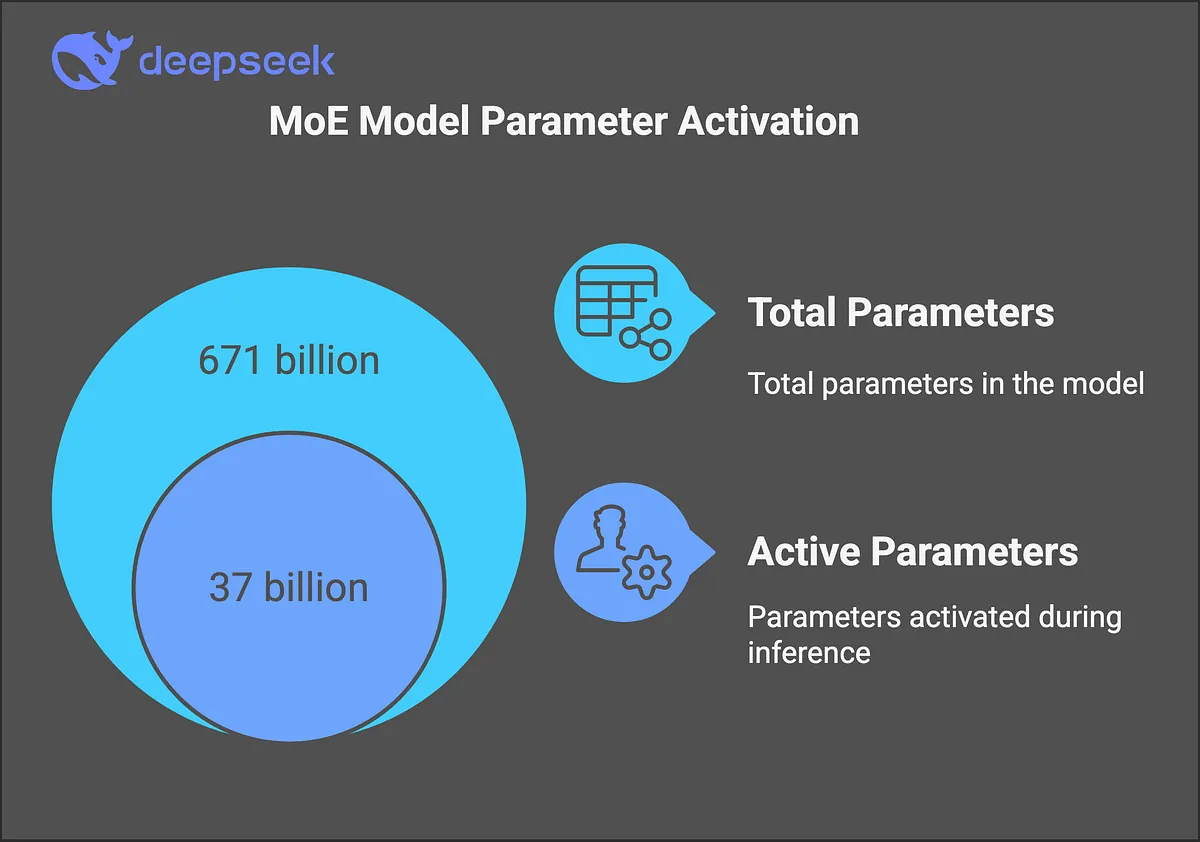
- Massive Parameter Count: DeepSeek R1 boasts a total of 671 billion parameters, organised into multiple expert networks.
- Selective Activation: Despite its vast size, Only 37 billion of the 671 billion parameters are used at a time, ensuring the model only uses what’s needed for the task. This selective engagement ensures that only the most relevant experts are utilised for each specific task, optimising computational efficiency.
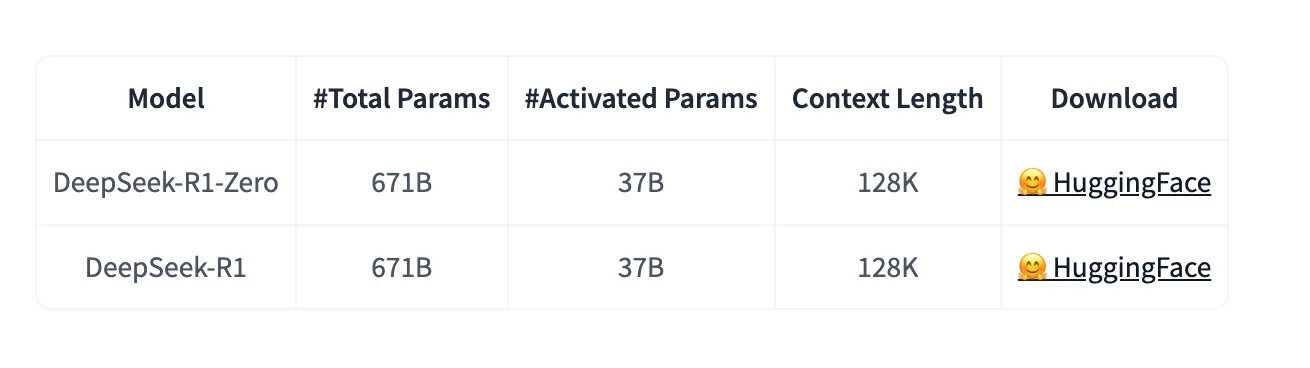 Source (HuggingFace)
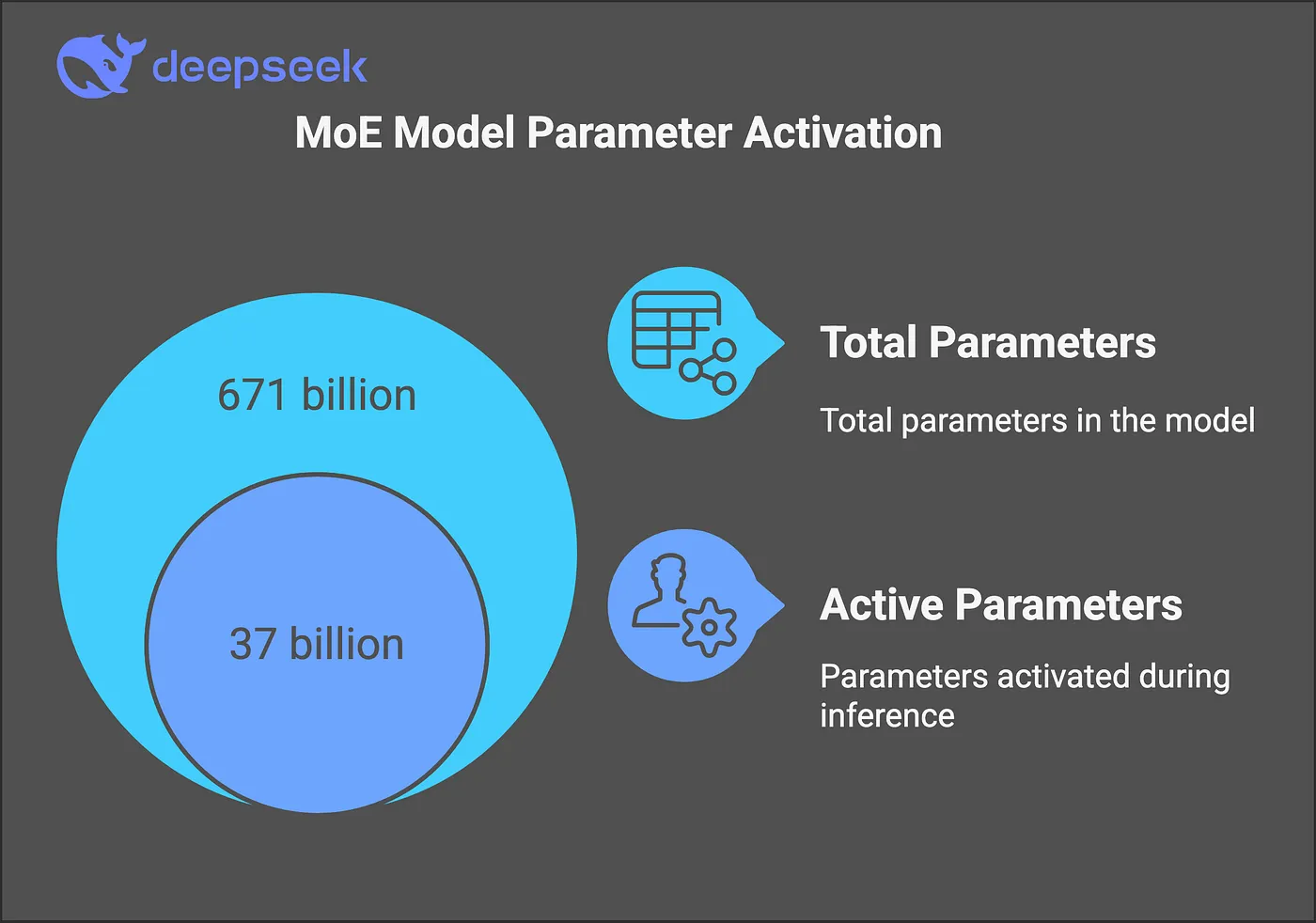 Deepseek R1 MOE Architecture.
The MoE framework divides the model into numerous expert sub-models. Experts specialise in tasks like mathematical computation, logical deduction, or language generation, enabling high performance at lower costs.
A gating network evaluates incoming data and dynamically routes it to the most appropriate experts. This mechanism ensures that only the necessary experts are activated, reducing computational overhead.
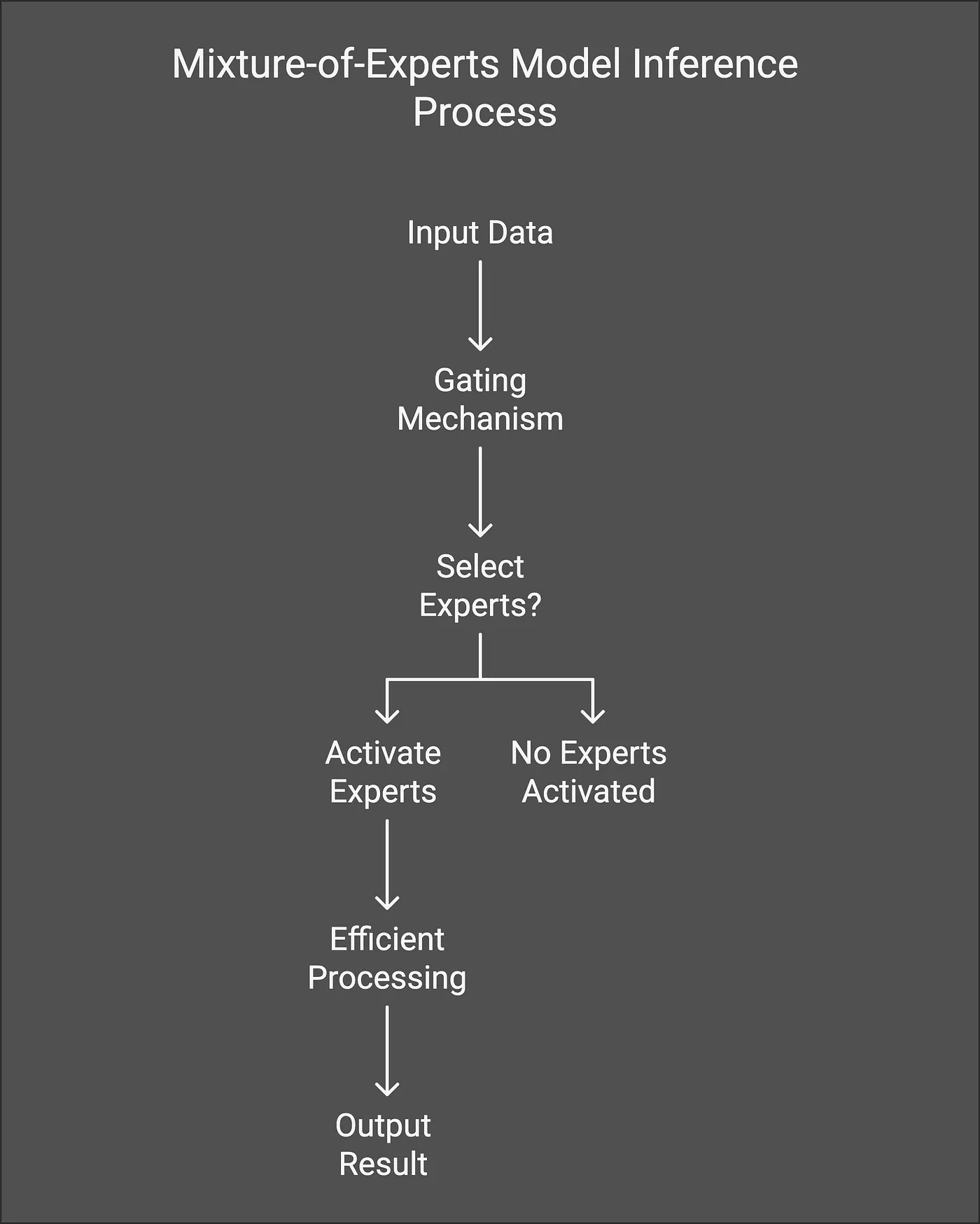 Diagram by the author.
Benefits of MoE in DeepSeek R1:
- Resource Efficiency: By activating only a subset of experts per task, DeepSeek R1 significantly reduces the computational resources required, leading to lower operational costs.
- Scalability: The MoE architecture allows the model to scale its capabilities without a proportional increase in computational demands, maintaining efficiency even as the model grows.
- Enhanced Performance: Specialised experts can handle specific tasks more effectively, improving the model’s overall performance across diverse applications.
Conclusion
DeepSeek R1 combines advanced reasoning capabilities with an efficient, cost-saving design, setting a new standard for AI models. Its Mixture of Experts architecture is a game-changer, offering scalability, resource efficiency, and high performance at a fraction of the cost of competitors. By launching a high-performing open-source model that’s affordable to use, DeepSeek is challenging Silicon Valley giants and paving the way for more accessible AI solutions.
The launch of DeepSeek R1 marks a significant milestone in AI development, one that could reshape the industry and open the door for innovation on a global scale.